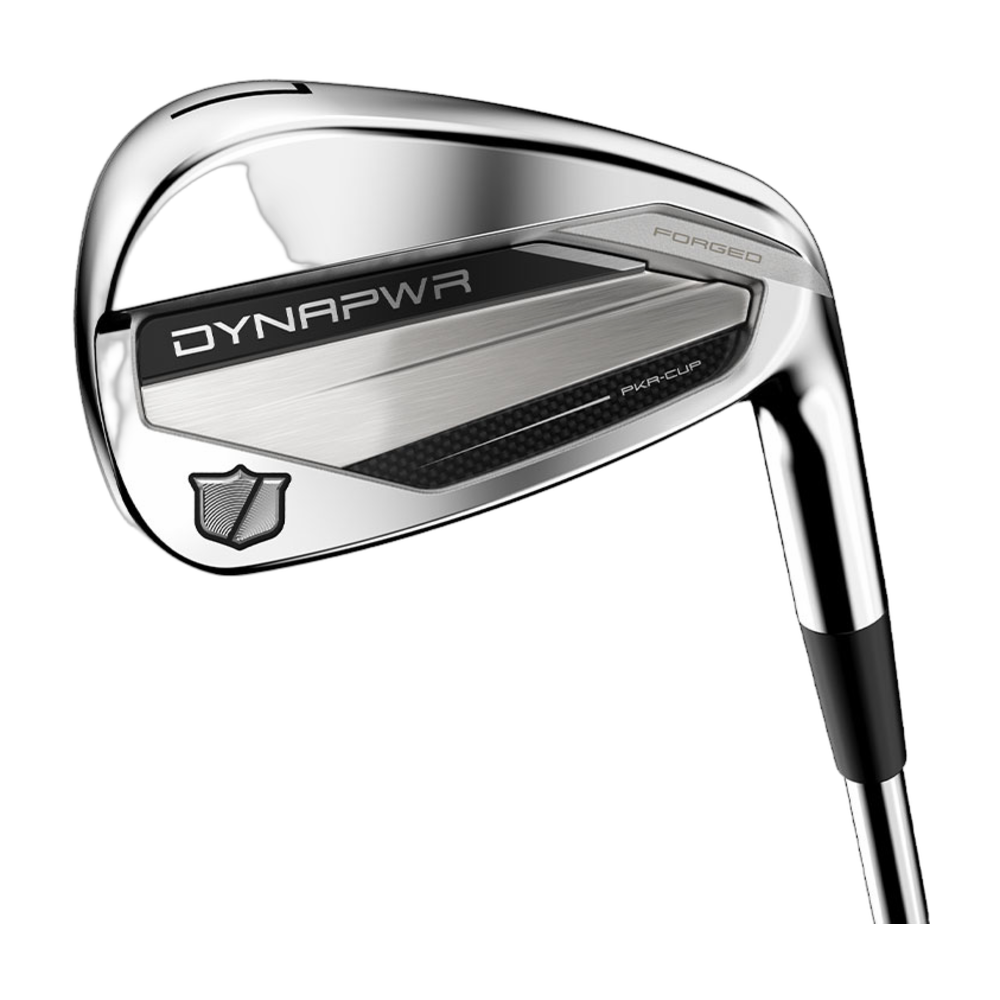
The Wilson DYNAPWR Forged 2026 blends forged looks and a soft, urethane-filled feel with player-distance performance, producing high, straight ball flight, class-leading forgiveness for the category and clearer feedback than before while keeping compact, player-inspired shaping.
The Wilson DYNAPWR Forged irons for 2026 are a player-distance design that prioritizes speed, forgiveness and a refined forged feel. Construction combines forged muscle with variable face thickness and a urethane cavity fill, which tames harsh vibrations and yields a softer impact sensation than the previous model. The overall package pushes ball speed and launch higher while maintaining compact, player-style lines at address.
Distance gains are real and measurable. Mid-to-long irons deliver notable carry and strong ball speed while retaining usable accuracy and consistent gapping across the set. When mishits occur, Power Hole-style engineering and the urethane fill blunt the penalty, producing surprisingly forgiving results, especially on low-face strikes. That makes these irons appealing to mid-handicap and older players chasing regained yardage without abandoning forged aesthetics.
Visually the DYNAPWR Forged leans player-focused but not minimalist. The head shape is compact at address and presents premium forged cues, though the rear cavity carries a busy graphic and detailing that may not suit those seeking a completely clean look. Feedback from strikes is clearer than the last iteration, helping players sense launch and spin differences, though shot-shaping remains limited compared with purist blades or workhorse musclebacks.
In short, the DYNAPWR Forged 2026 is a top-tier player-distance iron that balances feel, speed and forgiveness. It rewards players who want forged looks and softer acoustics but still need distance and launch. Better players who prioritize extreme shot-shaping or the cleanest visual aesthetic might prefer other Staff or XB models, but for most golfers wanting a high-performing forged iron with forgiveness, these are hard to beat.
Pros
- High ball speed and notable distance, especially in mid-to-long irons
- Excellent forgiveness for a player-style forged iron, including on low-face strikes
- Softer, refined feel and acoustics thanks to urethane cavity fill
- Compact, premium player-inspired looks at address
- Improved spin control and clearer feedback over the previous model
- Consistent gapping and accurate dispersion for mid-handicap players
Cons
- Limited shot-shaping and workability compared with blades or musclebacks
- Back cavity design is visually busy and may not suit minimalist tastes
- Some players may still prefer the Staff Model XB for specific set makeup or visual preference
- Potentially too much offset for low-handicap players seeking blade-like lines
Ratings
Distance consistency
90
Dispersion
83
Forgiveness
90
Control/Workability
65
Feel/Sound
82
Turf interaction
64
Flight consistency
84
Looks
76
Reviews
-

“The Wilson DYNAPWR Forged Irons are the king of the Players Distance irons with their high launch and LONG carry yet they look amazing, are accurate, and feel as good as any iron you’ll hit.”
Read full review -
“The stock ball flight for the 2026 Wilson DYNAPWR Forged irons can be summarized in two words: high and straight.”
Read full review -

“It does everything it claims to do: it’s fairly long, forgiving, and genuinely feels good.”
Read full review -

“If you’re sick of seeing your mishits fall out of the sky and come up short of the green, but still want an iron that makes you feel like an accomplished player, look to the Wilson Dynapwr Forged irons.”
Read full review -

“The Wilson DYNAPWR Forged has claimed the title of the premier player's distance iron for 2026, leading the field in both accuracy and forgiveness.”
Read full review
Compare retailers
Available from Affordable Golf and 2 other retailers
Affordable Golf From £430
Clubhouse Golf From £799
Golf Gear Direct £799 £849 6% off
No retailers are currently available in your local currency.
Market & price intelligence
Current best price
£430 ↑ 13.7%
vs 90-day usual £378
Lowest tracked
£139
6 Oct 2026
Highest tracked
£485
Now 11.3% below
Price range since tracking began (27 Sep 2026, 19 days)
Now £430
Low £139
High £485
Verified price landmarks are shown instead of an interpolated daily price curve.
Questions & answers
Who are the Wilson DYNAPWR Forged 2026 irons best suited for?
They suit mid-handicap and older golfers who want regained distance, higher launch and a softer forged feel while retaining compact, player-style looks and strong forgiveness on mishits.
Do these irons feel different from the previous DYNAPWR model?
Yes. The 2026 Forged version uses urethane cavity fill and refined construction for a softer, clearer feel and acoustics, plus improved spin control compared with the earlier iteration.
How forgiving are the DYNAPWR Forged irons on mishits?
Very forgiving for a player-oriented forged iron. Power Hole-style engineering and urethane dampening reduce penalties on low-face strikes and maintain ball speed and distance on off-center shots.
Will these irons help me hit the ball farther?
Yes. The design emphasizes high ball speed and launch, producing notable carry and distance gains in the mid-to-long irons while still providing consistent gapping and accuracy.
Are these irons good for shot-shaping and advanced workability?
No. They prioritize distance, launch and forgiveness over extreme workability, so players who need precise shot-shaping may prefer a blade or more traditional muscleback.
How do they look at address compared with other player-distance irons?
They present compact, premium forged styling at address, but the rear cavity is busier than some alternatives, which could be a visual drawback for golfers seeking the cleanest appearance.